NOA outdoor living NOA outdoor living
Case story

The leaders of the outdoor industry: Belgium as an international outdoor expert

If you thought Belgium was known only for fries, beer, and chocolate, you’d be wrong. Belgian outdoor design is world-renowned and is highly praised in both residential and architectural projects. The main reason? Striking design combined with materials that can withstand any weather. Thank you, rain, hail, freezing cold, and blazing summer sun! Interior PULP spoke with five CEOs of Belgian outdoor brands who proudly present their products at NOA to architects from all over the world: Katia Dewitte of Limited Edition, Annelies Deltour of Paneltim, Dirk Wynants of Extremis, Paul Renson of Renson, and Kris Van Puyvelde of Royal Botania.

Text: Nicolas Block – published in Interior Pulp

Why do you think Belgium is such a leader in high-end outdoor design?

Katia: “Belgians excel at design and are known worldwide for their high-quality products. That’s essential when developing outdoor products, because they have to withstand wind and weather. Add to that our timeless design, complemented by a touch of surrealism and boldness.”

Dirk: “You often hear that Belgians cherish every ray of sunshine because of the typically gray weather. I think that’s partly true. Still, I think the answer lies in our ‘brick in the stomach.’ Flemish people like to invest in their homes, and today the garden is a full-fledged part of that. People are building smaller homes, but they want higher quality. When they invest, they do so thoroughly.”

Paul is also convinced that our climate plays a role: “Here, everything has to withstand rain, wind, temperature fluctuations, and even stormy weather. Those technical constraints have shaped Belgian companies. We had to develop solutions that make outdoor living possible all year round, which has raised our standards.”

Kris adds: “Our international mindset is also important. Belgium is small, so anyone doing business here automatically has to think bigger. That means designing products that are universally relevant. No local gimmicks, but timeless designs that work just as well in New York as they do in Knokke.”

When do you think outdoor design became a fully-fledged discipline?

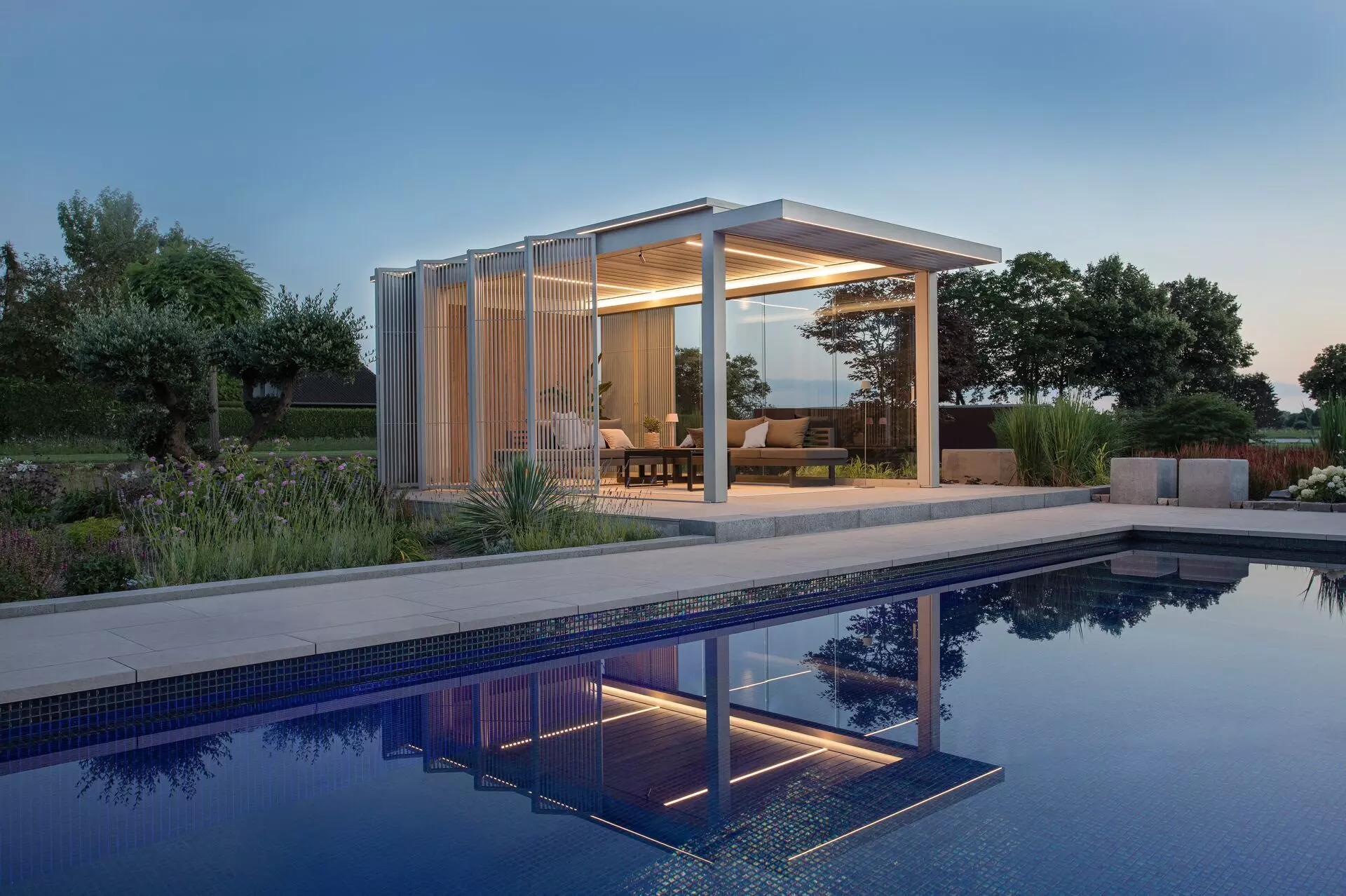
Kris: “From the moment architects started incorporating outdoor designs into their initial sketches, I think. In the past, the patio was added as an afterthought. Today, the materials used indoors flow seamlessly outdoors. Sightlines are coordinated with garden furniture. Lighting is designed as an integral part of the whole. Outdoor design is no longer an afterthought, but truly an integral part of the concept.”

Annelies: “Outdoor projects are also becoming increasingly complex: rooftop gardens, wellness zones, plunge pools, integrated benches. That calls for new construction methods. With Paneltim, we don’t deliver a fixed end product, but a system. Our panels are lightweight, structurally strong, and waterproof. This allows architects to create volumes that were previously only possible with heavy concrete structures. That technical freedom also elevates outdoor design to an architectural level.”

Paul: “And it doesn’t stop at the technical aspect. Comfort also plays a huge role. Shelter from rain, control over light, ventilation, heating, … It all has to be seamlessly integrated. People want to be able to live outdoors with the same comfort and ambiance as indoors.”

So what makes Belgian outdoor design so distinctive?

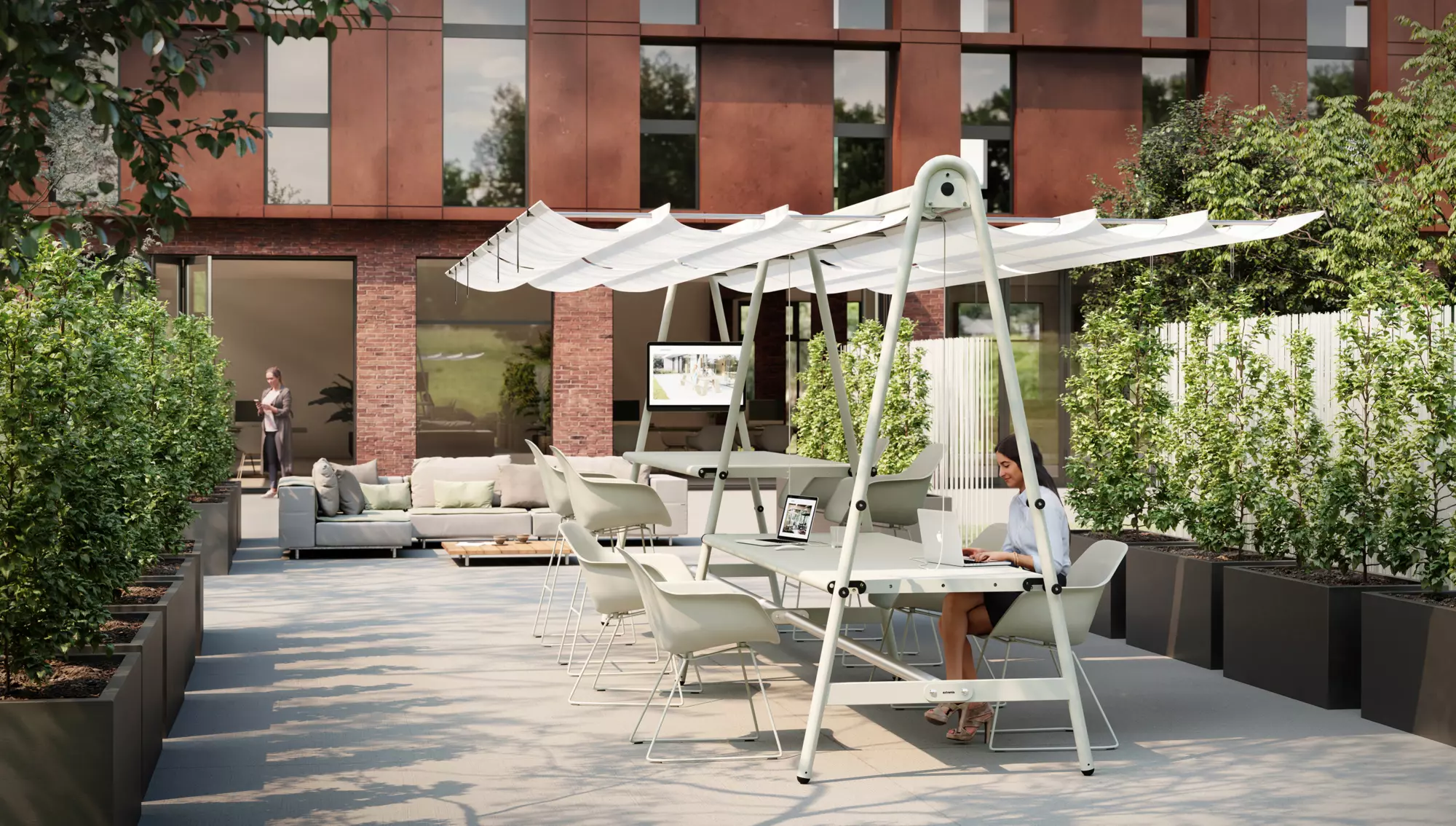
Dirk begins: “Belgian design doesn’t seek applause, but respect. We’re not a country of theatrical gestures. Our strength lies in subtlety. In balance. An outdoor space should bring tranquility. It’s a counter-movement to our increasingly fast-paced lives. That’s why we like to design social furniture, such as long tables and shared seating. Social interaction is central outdoors.”

Kris sums up what Belgian design means to him: “Understated luxury. No excess. No visual clutter. Clean lines, proper proportions, strong materials. Timelessness is perhaps the hardest style to achieve, but it is what we strive for. A good design must still be relevant twenty years from now.”

How do we distinguish ourselves from Italy and Scandinavia?

“In Scandinavia, there’s a strong emphasis on interior design,” says Dirk. “Outdoor design there often remains simpler. In Mediterranean countries, you sometimes see products that look fantastic, but I wonder how they’ll hold up after five years outdoors. Belgium falls somewhere in between. We hold ourselves to high standards. Aesthetics alone aren’t enough for us.”

Paul: “We think globally, but remain true to our Belgian blend of aesthetics, quality, and comfort. And you can see that in our outdoor spaces: visually concealed screws, an eye for detail, sleek designs, and meticulous customization that can be endlessly personalized thanks to the many options.”

Annelies: “What also sets us apart is our willingness to collaborate. Architects, engineers, and manufacturers often sit down together early on. That creates stronger overall concepts.”

Materials seem to be a Belgian strength. How important is innovation?

Annelies: “Extremely important. Belgium has a strong tradition in aluminum, steel, wood, and plastics. But what sets us apart is that we keep improving. Our panels are completely waterproof, lightweight, and structurally strong. They’re recyclable and allow for tremendous design freedom. That’s essential in high-end projects where customization is the norm.”

Paul adds: “As a sustainable and low-maintenance base material for patio covers, aluminum holds no secrets for us. But we’re also actively innovating with other natural materials. Think of fabric and wood for integrated elements, such as curtains, screens, or sliding panels. As long as they blend seamlessly into the architecture of an outdoor pavilion, just like technology such as heating and lighting.”

Kris: “Sustainability also plays a major role. We design products that last twenty years or longer. That requires not only high-quality materials, but also well-thought-out constructions and hidden technical solutions.”

How important is the overall experience today?

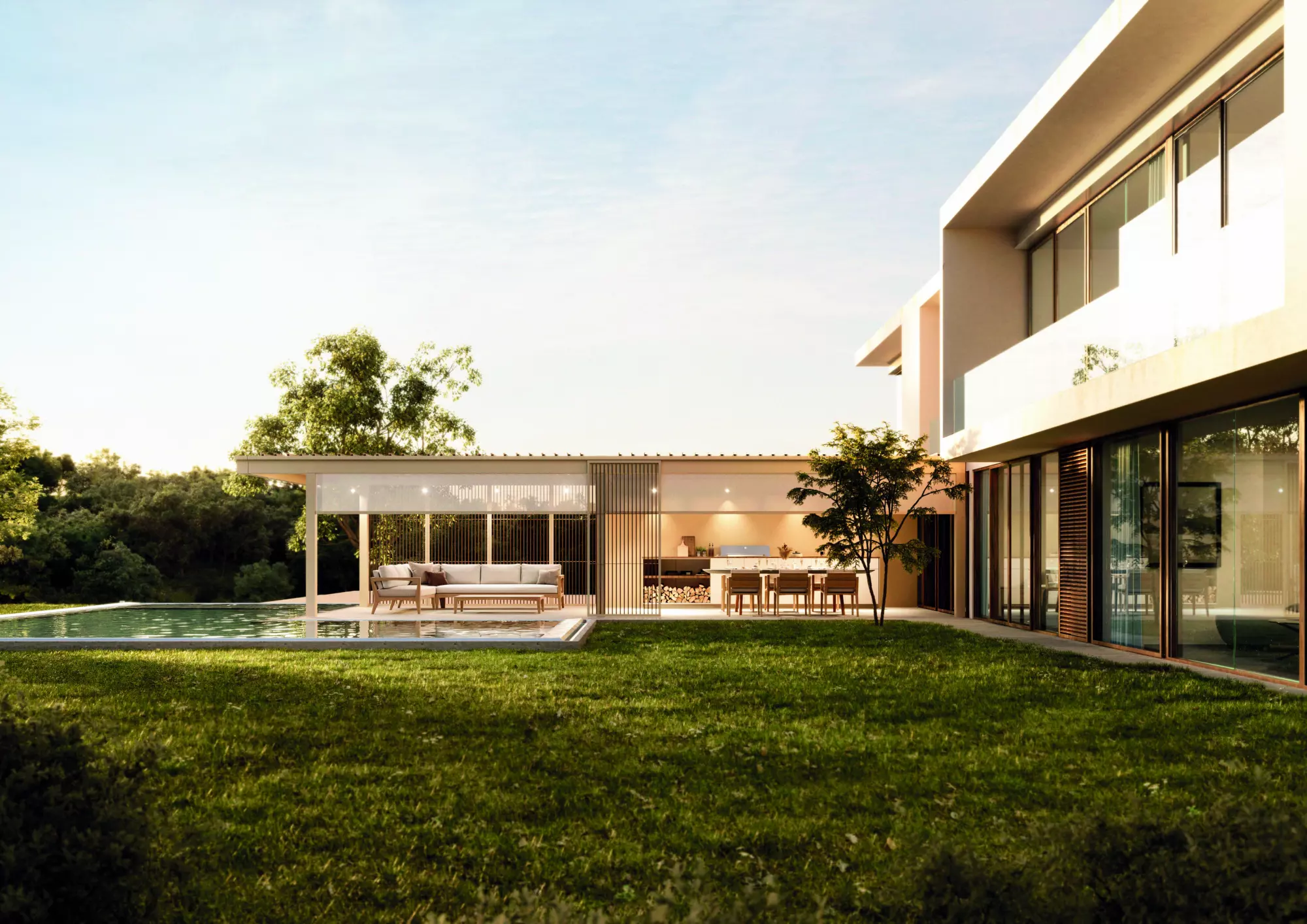
Paul: “Crucial. Although our starting point in outdoor living has always been to provide shelter from the elements, we’ve evolved from standalone sun protection products to complete outdoor living spaces. People want a place where they can work, dine, relax, and even exercise. Options like fixed walls, built-in heating, lighting, and audio ensure that you can spend time outdoors tailored to your needs without sacrificing comfort or visual tranquility.”

Dirk responds: “But we have to be careful that the outdoors doesn’t become a copy of the indoors. The outdoors must remain the outdoors. Wind, light, seasons: those are qualities. It’s about balance. Comfort without losing the character of the outdoors.”

What role will sustainability play in the future?

Annelies begins: “Sustainability is the foundation of everything. Recyclable materials, modular systems, a long lifespan — these will become the norm. We’re investing heavily in circular solutions. Not just to be environmentally responsible, but also because the market demands it.”

Katia: “That’s why we’re particularly strong at using recycled materials and aren’t afraid to experiment with new, sustainable materials like PVC.”

“For us, sustainability also means timelessness,” says Kris. “A design that feels dated after five years isn’t sustainable. True sustainability combines aesthetics, technology, and longevity.”

What does the future of high-end outdoor furniture look like?

Dirk: “Outdoor furniture may well have the greatest growth potential in the furniture industry. Our indoor spaces are getting smaller, our schedules busier. The need for nature is growing. I strongly believe in biophilic design — the integration of natural elements to promote mental well-being. In my view, outdoor furniture is becoming less of a luxury and more of a necessity.”

Katia: “I’m also convinced that outdoor rugs will become even more popular and will even be used indoors. They’re known for being easy to maintain and durable, which comes in handy in any space—including the kitchen, for example.”

Paul: “Outdoor living is the future. People want peace and fresh air, but without sacrificing comfort. And that’s exactly what we aim to contribute with our outdoor living spaces.”

Annelies adds: “I believe the future lies in material innovation. New core structures, new surface layers, lighter systems. But always with architectural freedom as the goal.”

Kris concludes: “What remains is quality. Trends come and go. But those who invest in well-thought-out, sustainable products are investing in time.”

About NOA:
NOA outdoor living is an experience park for outdoor design in Kruisem. In the theme gardens, you can find inspiration to decorate your garden. These gardens combine architecture, landscape, and interior, and welcome architects, landscape architects, designers, and contractors as well as private prospects. In this inspiration park, you will find luxurious garden furniture and designs by more than 25 high-end partners, who are happy to advise you as you bring your dream garden to life. Moreover, the park is the perfect professional networking location; the conference rooms, covered patio, spacious showroom, and plaza of NOA outdoor living are the ideal setting for your conference, product presentation, or product launch.

Prev Return to overview Next
PLAN YOUR EXPERIENCE
×